The Science and Art of Officiating
Sports officiating is both a science and an art. It is a science because officiating is based on a known body of skills and knowledge, such as playing rules, positioning, mechanics, and procedures, all of which are acquired by formal education and training programs. Officiating, however, is also an art because much of the officiating craft—perhaps even most of it involves nuances and subtleties in applying those skills that become unique to each official, much as individual painters or sculptors interpret the same subject differently, even though they may have had comparable training. In hockey officiating, as in the art world, the work of some individuals will be highly prized, while that of others will be ignored, or even scorned.

All too often, young officials spend too much of their time on the “science” of officiating, being able to recite arcane provisions of obscure playing rules while ignoring the “arts,” like judgement, discretion, and poise that enable them to apply the right rule at the right time under the right circumstances for the right reasons.

Of all the major team sports, hockey officiating is, by far, the most demanding. Hockey officials not only are required to apply complex rules in a consistent and acceptable manner but also must skate well enough to get to the proper position to make the right judgment, all the while dodging players, sticks, and flying pucks under the fire of intense athletic competition that invariably produces significant mental and emotional pressures. In addition, hockey officials probably have far more discretion in applying or not applying the rules depending on a host of circumstances.

As an official, you are charged with responsibility to manage each game within a prescribed set of rules. However, any game that is officiated literally “by the book” would soon become uninteresting to the spectators and frustrating to the players. A contest that is frequently and unnecessarily interrupted by the officials’ whistles leaves no one satisfied. The most accomplished and respected officials develop an instinct for each game, using their discretion to encourage sportsmanlike, competitive play while discouraging and penalizing unsportsmanlike, overly aggressive, or unfair conduct. In addition to “scientific” knowledge, these officials clearly have an artist’s touch.

Enter the Artist
The “art” of officiating essentially involves the ability of an official to “sell” his paintings (decisions) with little or no dialog on the part of participants. He or she sells each painting by presence, poise, and obvious command of the situation. The artist exhibits a certain savvy about each game. He or she can tell the difference between an intensely contested game and one with malicious overtones. He or she also has enough “rink smarts” to gauge the intent of the participants. Although called an official, the artist also recognizes that he or she was not hired to be officious, overbearing, authoritarian, or a tough guy. The artist enforces the rules tempered with reason. That is a good word to remember. The most respected officials, invariably, are reasonable people.

Players and coaches respond well to reasonable treatment. But it is not always easy to be reasonable. Under pressure, the scientific official falls back on invoking rules, making it immediately known that he or she knows the rules, and that’s that. The artist also knows the rules but is also concerned with emotions and tries to handle each situation in a manner that maintains respect on all sides. Although the artist knows that the official is the final authority, he or she is willing to explain decisions or interpretations when called for and “drops the hammer” only when absolutely necessary.

Why do you do it?
Hockey officiating isn’t easy. The most commonly asked question of officials at all levels is “Why do you do it?”

Perhaps money is the first motivator, especially for younger people who see officiating as an attractive alternative to flipping burgers after school. But experience has shown that the desire to be part of the game and to help maintain a level of physical conditioning are also important factors. Looking further, personality studies have found that, as a group, sports officials exhibit a higher degree of dominance characteristics than the general population. Officials like to be in charge. Once on center stage, they enjoy having to make split-second decisions under pressure. Additionally, they are strong-willed and goal-conscious.

These traits generally don’t give one a tendency to be humble. Humility is the opposite of arrogance. Yet, the artist is always able to inject a dash of humility into his or her personality. While the arrogant official will be more visible, the one with some humility will get more respect.

Refining Your “Brush Strokes”
Once you have mastered the “science” of officiating, you must develop the intangibles that separate one official from another. In other words, your “artist’s touch.”

Your acceptability will be based on how artistic a job you do. Common sense, sound judgement, and discretion are three fundamental intangibles that, together, form the basis of your artistry. Another important intangible is self-confidence. If you have confidence in your ability and the courage of your convictions, you will show pride in your work without being arrogant, become determined without being overbearing, and generally have a good feeling about yourself and your role as a hockey official.

When watching games as a spectator, don’t worry about judgement calls. Instead, pay attention to how the officials deal with the irritants that crop up in every game. Note how top-notch officials get their jobs done. They make the difficult seem easy and generally handle things in a way that makes everybody reasonable. They don’t get ruffled, become red in the face, or lose their tempers. In short, they give the impression that they’ve been there before.

To sum up, hockey officiating is not easy. It is a challenge that, with a little thought and a lot of hard work, can become an exciting and rewarding experience.

GOOD LUCK!

The 2025-2029 Rule Changes take effect on August 1, 2025

youtube placeholder image

For more information please see: https://www.usahockey.com/2025-29-usah-rule-changes

2025-2029 USA Hockey Officials Rules and Casebook of Ice Hockey: https://cdn1.sportngin.com/attachments/document/4f1a-3442850/2025-29_USAH_Playing_Rules___Casebook.pdf

2025-29 USA Hockey Playing Rules – Points of Emphasis: https://cdn1.sportngin.com/attachments/document/3236-3383329/USA_Hockey_Playing_Rules_POE_2025-29.docx

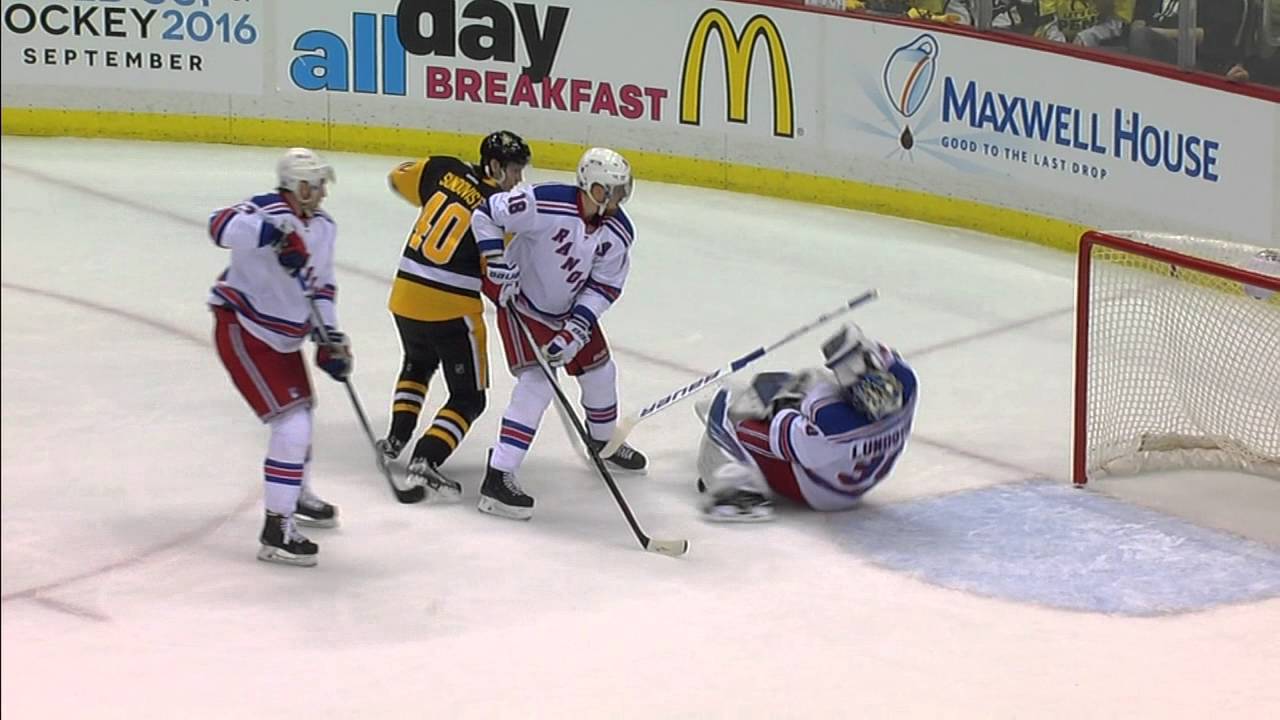
Whether it’s Zach Parise’s work ethic or Patrick Kane’s puck skills, young players love emulating their favorite pro players. So if a young goalie has the chance to wear the same mask as world-renowned goalies such as Henrik Lundqvist, he or she will likely jump at the opportunity.

Unfortunately, certain masks could jeopardize their safety and their team. Cat eye masks, which gained popularity through their use by professional goaltenders, are illegal for youth and high school players. The masks lack certification by HECC (Hockey Equipment Certification Council) as required by USA Hockey because the larger eye openings expose young goaltenders’ eyes to stick contact.

An incident during this spring’s Stanley Cup Playoffs involving Lundqvist shows just how dangerous the masks can be: 

youtube placeholder image

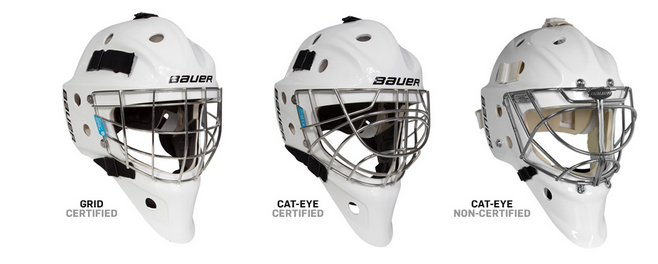
Since cat eye masks have been restricted at the youth levels, manufacturers have developed a modified cat eye mask which meets HECC standards and is approved for play.  The mask is considered safe for goalies to use, but they also create confusion between which masks can be used. The chart below outlines the three most common types of goalie masks.

Coaches, parents and referees are encouraged to educate themselves on the differences between the various types of goalie masks on the market. The safest way to find a legal mask is to look for a valid HECC certification sticker on the mask and helmet. 

Legal v. Not Legal

** REMINDER RETURNING OFFICIALS **

Returning officials have 5 days to complete their requirements for the 18/19 season AND have their new crest on their sweater.

Off-Side

An attacking or defending player in an end zone shoots the puck into the Neutral Zone. The puck hits an Official in the Neutral Zone and deflects off the Official back into the end zone while an attacking player is still in the Attacking Zone. Where is the ensuing face-off?

At the point of deflection. Rule Reference 630(b).

Any deflection, whether off a teammate, an opponent, an Official, or the boards or glass creating an off-side situation at the blue line, must be treated as such. Officials must always strive to position themselves in such a manner that would allow the puck to leave the zone before striking them, thereby creating the off-side situation.

Sticks

During the course of play, a goaltender loses his stick. His defensemen picks up the goaltenders stick while in possession of his own stick; in the process of returning the stick to the goaltender, the defensemen plays the puck, is this a legal play?

No, Rule Reference 301(e)

A minor penalty for an equipment violation shall be assessed to a player or goalkeeper who participates in the play while he is in possession of more than one stick, except that no penalty shall be assessed to a player who is accidentally struck by the puck while he is carrying a replacement stick to a teammate.

Composition of Teams

During the course of the game the referee is notified that Players or Team Officials that have received a previous suspension are participating in the game. These players did not sit out or fulfill their obligated suspension time. Should the referee penalize the offending team?

No. Rule Reference 201(c).

The referee may not be aware of the time period that has taken place between games and therefore cannot enforce suspensions to Players or Team Officials. The referee is required to report the incident to the proper authorities for further review.

** REMINDER RETURNING OFFICIALS **

Returning officials need complete their requirements for the 18/19 season AND have their new crest on their sweater by December 1st.

Standard of Play

The attacking team is in possession of the puck in the Attacking Zone and the puck is passed back to the blue line. The puck stops on the blue line, then is shot back again. Has an off-sides infraction occurred?

No. Rule Reference 630(a).

The puck would have had to completely cross the blue line before being shot back into the Attacking Zone for an off-side to occur.

Throwing the Stick

 A defending player throws his stick along the ice at an attacking player in possession and control of the puck. The attacking player is in his Attacking Zone when the stick is thrown. The stick does not hit the puck or the player, but the player loses possession of the puck. Is a penalty shot to be awarded?

Yes. The offended team has a penalty shot/optional minor penalty option. Rule Reference 637(a).

When a defending player throws his stick in the direction of the puck that is in his Defending Zone, a penalty shot must be awarded. In this situation the Referee cannot be expected to determine whether the stick caused the attacking player to lose his concentration or if he lost possession by his own actions.

Abuse of Officials

A player on the ice makes physical contact with an Official following a decision made by that Official. What penalty or penalties shall be assessed?

A misconduct, game misconduct or match penalty, depending on the severity of the offense. Rule References 601(d.1, e.4 and f.1). The officials must be able to distinguish between the severity of the contact and the intent of the player in order to assess the appropriate penalty. Simply touching an official does not constitute a physical assault calling for a match penalty.

To those in uniform serving today and to those who have served in the past, we honor you today and every day.

Hooking
What would be examples of an infraction warranting a major penalty for hooking?

Rule Reference 623(a).

1) A player is hooked around the waist, and the offending player is able to steer the opponent violently into the boards or goal frame.

2) A player is hooked between the legs and the offending player uses the blade of the stick to punish the opponent (AKA cup check). This could also be penalized under Spearing if the toe of the blade is used.

401 – Penalties
Any player who receives five penalties in the same game shall be assessed a game misconduct penalty. [Game Misconduct shall be recorded on the game sheet in addition to the players other penalties.]
(note: know any league specific rules!)

Any Head Coach whose team receives 15 or more penalties during one game shall be suspended for the next scheduled game of that team. See 401 – Situation 4, page 95. [15 or more penalties shall be noted on the game sheet]
In both situations, a Game Report is required.

Broken Stick
What does the word “participate” mean in reference to a player who participates in play with a broken stick?

“Participate” shall mean playing or attempting to play the puck, body-checking or attempting to body-check an opponent, or continuing any action that directly affects the play. Rule Reference 605(a).

A player may carry a broken stick to his players’ bench only if he is in the immediate vicinity of the bench, is completely out of the play and does so immediately upon breaking the stick.

18 Days!
You have 18 days left to complete your requirements for the 18/19 season, don’t wait!

Your turn
Have a question that you’d like to see answered here? Knowledge that you’d like to share? Just hit reply, we’d love to hear from you. 

#WeHaveYourBack
Have you as an official been placed in a situation that you feel was not resolved to your satisfaction? We can help you. We are here to support you. Abuse by a player or coach is never acceptable, we have your back. Click reply, and we’ll do what we can to help.

If you would like to promote your business to other officials, 
click reply to this email with the details.

26 Days

Friendly reminder that you need to have the 18/19 Crest on your sweater in 26 days. Complete your requirements now! Avoid having to turn back games, don’t wait!

3 Rules You Thought You Knew – Issue 7

Injured Players

In a Youth or Girls’ game a player is hit by the puck in the neck area and falls to the ice. When should the play be stopped?

Play should always be stopped the instant any of the On-Ice Officials believes the injury to be serious or when the injured player’s team gains possession of the puck in a non-scoring position. Rule Reference 206(a).

Although the Referee will generally stop play for an injured player, any on-ice official should stop play immediately at the younger age levels anytime they deem the injury may be serious. If unsure as to the seriousness of the injury, officials should always err on the side of caution.
If the injury is not deemed to be serious, play should continue until that player’s team gains possession and control of the puck in a non-scoring situation.

Tripping

The goalkeeper skates out of his goal crease to meet an attacking player on a breakaway and deliberately trips the player as he tries to go around the goalkeeper. What penalty should be assessed?

A minor penalty. Rule Reference 639(Note & a).
This situation does not call for a penalty shot because the player has not been fouled from behind.

What is the minimum penalty for Slew Footing?

A minor Penalty, Rule Reference 639 Note 4

Note 4) Slew Footing is the act of a player using his leg or foot to knock or kick an opponent’s feet from under him. This is done by pushing an opponent’s upper body backward with an arm or elbow and at the same time using a forward motion of his leg causing the opponent to fall to the ice.

(a) A minor or major penalty shall be assessed under this rule for any of the actions described above.
(Note) However, no penalty shall be assessed under this rule if, in the opinion of the Referee, the player was clearly hook-checking or poke-checking the puck for the purpose of gaining possession.
(b) A major penalty plus a game misconduct penalty shall be assessed to any player who injures an opponent as a result of tripping, clipping, leg checking or slew footing.

NOTE Case Book 639 Situation 4 – Injury Potential – in most instances a Slew Foot should be called as at least a Major Penalty because it is an injury potential penalty.

Your turn

Have a question that you’d like to see answered here? Knowledge that you’d like to share? Just hit reply, we’d love to hear from you.

#WeHaveYourBack

Have you as an official been placed in a situation that you feel was not resolved to your satisfaction? We can help you. We are here to support you. Abuse by a player or coach is never acceptable, we have your back. Click reply, and we’ll do what we can to help.

If you would like to promote your business to other officials,
email with the details.

Goalkeeper

What’s the call if a goaltender comes to the bench during a stoppage of play

Rule 205(e)

During a stoppage of play a goalkeeper may not go to his players’ bench without the permission of the Referee (except during time-outs) unless he is substituted for by another player or goalkeeper. For a violation of this rule a bench minor penalty for illegal substitution shall be assessed.

Hand Pass

Puck is flipped in the air near goal crease. Attacking player and defenseman both reach up to try and bat puck with hand (jump ball). Attacking player bats puck into defenseman and then puck goes into goal. Puck would not have gone in without contact by defenseman. Goal or no goal?

618(b)
No goal can be scored as a result of the puck being propelled by the hand of an attacking player regardless if the puck enters the goal directly from the hand or deflects off of any player prior to entering the goal.

Goalkeeper Equipment

Can a goalkeeper playing in the Youth or Girls’ age classifications wear a “cats-eye” facemask?

Yes, as long as it is HECC approved. Rule References 303(b) and 304 (c & d).
There are some HECC approved goalkeeper facemasks that do have the look of a “cat’s-eye” shape. In these cases, the openings of the facemask are small enough to meet ASTM standards and do receive HECC approval. The shape of the opening is not important, it is the size of the opening that will determine whether certification is gained.

Why? http://www.youtube.com/watch?v=t8w6eR0o7vw

HECC Certification

The Non-Certified Cat-Eye on the RIGHT, will NOT have the HECC Sticker on it

Your turn

Today’s questions came from you! Have a question that you’d like to see answered here? Knowledge that you’d like to share? Just hit reply, we’d love to hear from you.

#WeHaveYourBack

Have you as an official been placed in a situation that you feel was not resolved to your satisfaction? We can help you. We are here to support you. Abuse by a player or coach is never acceptable, we have your back. Click reply, and we’ll do what we can to help.

Puck Must Be Kept In Motion

A player is playing the puck along the boards with his skates or stick, but not advancing the puck in an attempt to obtain a stoppage of play. What should the Referee do if this action continues?

Initially the Referee should verbally alert the player to advance the puck, provided he is not being checked. If, after approximately three seconds expire, no attempt has been made to advance the puck, the Referee shall stop play and assess a minor penalty for delaying the game. Rule References 632(b) and 610(a).

It is most important for the Referee to verbally instruct the player to move the puck.

Throwing The Stick

With the goalkeeper off the ice, an opposing player gains possession of the puck on a breakaway in the Neutral Zone, and the puck is knocked off his stick by a stick thrown by a trailing defending player. The attacking player himself is not interfered with, and would easily be able to regain possession of the loose puck, continue on his breakaway and (in the Referee’s opinion) score a goal. Should the Referee stop play immediately and award the goal?

Yes. Rule Reference 637(b).

In this situation the offended player is not required to be in his Attacking Zone for an awarded goal to apply when a stick or other object is thrown or shot. Note also that if the Referee does not feel that the player would have had a clear shot on goal had the thrown stick not occurred, then the proper call is a minor penalty since the infraction did not occur in the offending player’s Defending Zone.

Sticks

A player uses a hollow shafted stick without the insertion plug on the top. Shall the Referee allow a player to play with such a stick?

No, the stick shall be replaced immediately. Rule Reference 301(a).

The player must have the plug inserted or have a sufficient amount of tape covering the exposed end of the shaft to prevent injury.

Your turn

Have a question that you’d like to see answered here? Knowledge that you’d like to share? Just hit reply, we’d love to hear from you.

#WeHaveYourBack

Have you as an official been placed in a situation that you feel was not resolved to your satisfaction? We can help you. We are here to support you. Abuse by a player or coach is never acceptable, we have your back. Click reply, and we’ll do what we can to help.

If you would like to promote your business to other officials, click reply to this email with the details.

Broken Stick

The goalkeeper breaks his stick. A player of the same team obtains a goalkeeper’s stick at the players’ bench and, in the act of taking the stick to the goalkeeper, he slides it along the ice to the goalkeeper. Is this action considered to be legal?

Yes. Rule References 605(b), 625(a.7) and 637(a). No penalty would be imposed unless the stick was thrown in the direction of the puck (Rule 637) or does so for the purpose of distracting an opponent (Rule 625).

High Stick / Faceoff Location

A player high sticks the puck which deflects to an opponent. The opponent makes no attempt to play the puck, hoping to get a face-off in the offending team’s Defending Zone when the puck is first played by a member of the offending team. What should the Referee do?

The Referee should stop play and the ensuing face-off shall take place at an end face-off spot in the Defending Zone of the offending team. Rule Reference 621(c). The non- offending team has no obligation to play the puck in this instance, because of the high stick infraction committed by the opposing team.

Interference

The puck is legally in the crease. It is loose. It is sitting next to the goalie’s leg pad, with the leg horizontal to the ice. An attacking player pushes the puck in the net, along with the goalie’s leg. Goal or no goal?

An attacking player may not physically interfere with a goalkeeper in his/her crease. While a puck that is located in the crease is “in play”, an attacking player may not push or otherwise force the puck into the goal by making contact with the goalkeeper.

Your turn

Have a question that you’d like to see answered here? Knowledge that you’d like to share? Just hit reply, we’d love to hear from you.

#WeHaveYourBack

Have you as an official been placed in a situation that you feel was not resolved to your satisfaction? We can help you. We are here to support you. Abuse by a player or coach is never acceptable, we have your back. Click reply, and we’ll do what we can to help.

If you would like to promote your business to other officials, click reply to this email with the details.