Q&A with Matt Leaf on the importance of game reporting

Published in Stripes – 1/11/2019

Everyone in hockey wants the game to be played within the rules. More importantly, they want those who fail to do so to be held accountable for their actions. 

As a result, USA Hockey has spent the past several seasons making appropriate consequences for the rule-breakers, including more severe penalties for dangerous actions and progressive suspensions for repeat offenders.

And while officials can’t prevent the dangerous action from occurring, they do play a significant role in holding accountable those responsible for these actions with proper rule enforcement. Not only that, but officials must fulfill their responsibility of submitting an accurate and timely game report through the USA Hockey Online Game Reporting System. 

STRIPES recently sat down with Matt Leaf, director of the officiating education program, to learn more about the game reporting process and to address some of the concerns he hears from affiliate disciplinary personnel on the reporting process and what officials can do better.

STRIPES: The Online Game Reporting System is in its fifth season, what are some of the areas where the system has helped the game?
Matt Leaf:
 When properly used, the system has definitely helped affiliates and local leagues manage suspensions and the disciplinary process. It allows for a consistent game-reporting format where the required information immediately gets into the hands of the proper authorities once submitted by the official. The system also provides a more user-friendly mechanism for the officials to file the report on their mobile devices.

One other benefit is, with better compliance in filing reports each season, USA Hockey can track certain infractions and identify any trends both geographically and by types of infractions.

STRIPES: How is USA Hockey looking to continue to improve the system and make it even easier for the officials?
Leaf:
 We are constantly receiving feedback from affiliate administrators and officials with suggestions, and all of that is taken seriously. In some cases, there are good ideas that we try to incorporate as soon as possible. In other situations, a bigger picture needs to be taken into consideration.

One main area that we are working on is the player search component and tying that into team rosters so officials can simply pull down the team roster to identify the player versus trying to narrow down an entire database. Doing so will greatly improve the accuracy of identifying the guilty player/coach and simplify the process for officials. 

The second area that is being worked on is the reporting side of things for administrators and making penalty data more readily available – basically simplifying their ability to manage hundreds of reports.

STRIPES: What is the official’s responsibility when it comes to submitting game reports?
Leaf:
 First and foremost, with the new progressive suspension rules, the official has to be timely in submitting reports so the system can identify any players/coaches who have reached a suspension threshold. Timely should be well within 24 hours of the game, but certainly no longer than 48 hours (the sooner part of this option being preferred).

Next, it is imperative that the official pays attention to details and provides accurate information in regards to the player(s)/coaches involved (e.g., the type of penalty assessed and the proper rule reference). There really is no excuse for an official to submit a report for clicking on a minor plus misconduct for head contact when in fact they assessed a major plus game misconduct. The correct rule reference is also important as it does play a role in the system’s ability to track repeat offenders.

STRIPES: That seems to be pretty critical information.  What are some other things officials need to know when submitting a game report?
Leaf:
 The most common mistake made is when an official submits a duplicate report (or maybe both officials submit a report) for the same incident. This creates problems because the system does not know it is a duplicate, so it counts it as two different strikes against the same player, even though it was only one infraction. Only one report (the officials can work on it together, if needed) needs to submitted for each incident.

Another common error is submitting multiple reports from the same game when, in fact, the system is designed to handle multiple incidents involving multiple players from the same game. Instead of starting over with a new report for each penalty assessed, the officials can simply do one report for the game and identify each incident separately in the one report.

Finally, officials have to know the rules and the consequences for the rules. Under Rule 411 (Progressive Suspensions), there is a full listing of infractions involving major penalties that require a report to be submitted. Each penalty also has to be listed separately. For example, a player gets a major penalty for slashing, and then later on, gets a major plus game misconduct for head contact. It’s not enough to simply submit a report assessing a game misconduct for the second major penalty in the same game. The report needs to have each penalty (slashing, head contact, game misconduct for second major) listed separately so the system can properly track the aggressive fouls and send out the automatic alert when a threshold is reached.

STRIPES: Any other final words of wisdom?
Leaf:
 USA Hockey wants players and coaches held accountable for their actions, whether it is for unsportsmanlike behavior or dangerous play outside the boundaries established the rules. This can’t be accomplished without the help of the officials properly enforcing the rules and submitting the appropriate game report when needed. 

Officials have a responsibility (in fact it is part of their duties) to properly submit accurate game reports when required.

Detailed instructions on filing game reports are available on USAHockey.com, and if unsure on something, ask your local supervisor or assignor. Paying attention to details in submitting a timely and accurate report will not only minimize confusion and having to answer questions later, but also will eliminate having suspensions overturned on technical issues and will, ultimately, hold those who tarnish the game with their behavior accountable for their actions.
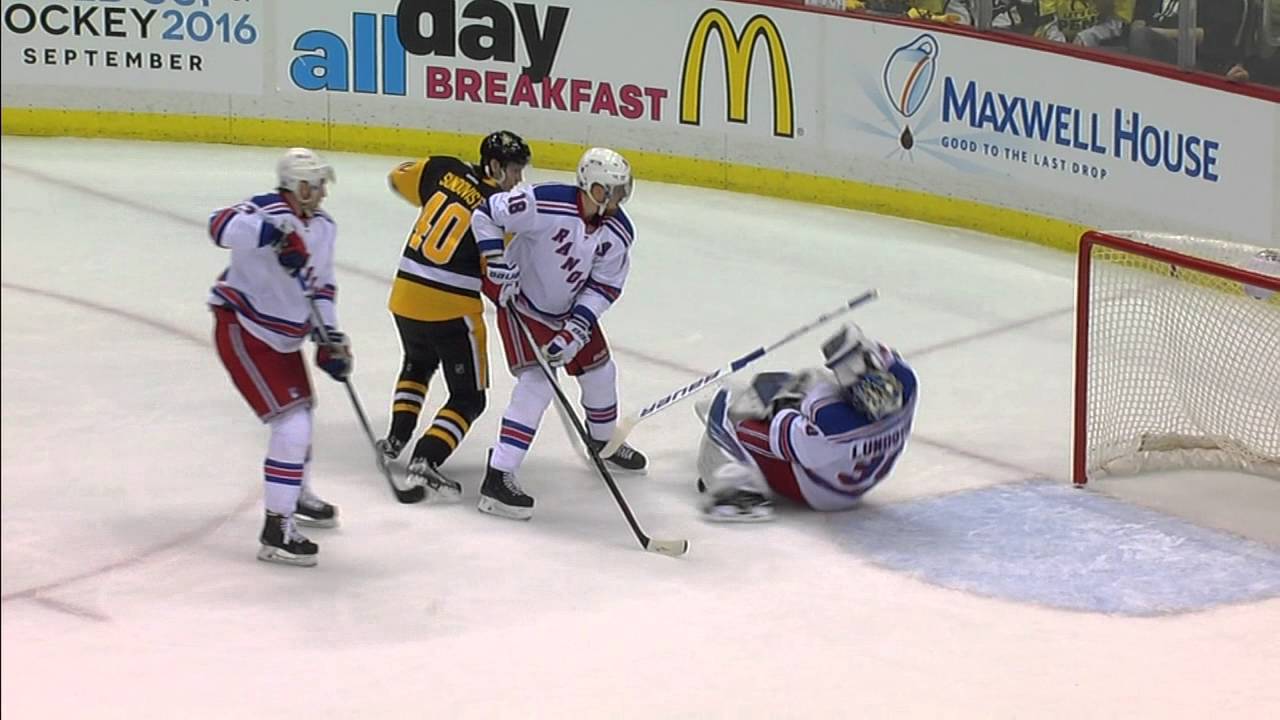
Whether it’s Zach Parise’s work ethic or Patrick Kane’s puck skills, young players love emulating their favorite pro players. So if a young goalie has the chance to wear the same mask as world-renowned goalies such as Henrik Lundqvist, he or she will likely jump at the opportunity.

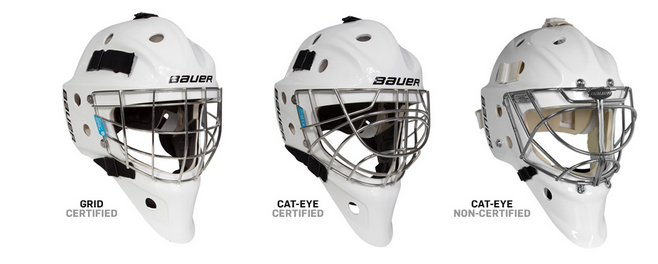
Unfortunately, certain masks could jeopardize their safety and their team. Cat eye masks, which gained popularity through their use by professional goaltenders, are illegal for youth and high school players. The masks lack certification by HECC (Hockey Equipment Certification Council) as required by USA Hockey because the larger eye openings expose young goaltenders’ eyes to stick contact.

An incident during this spring’s Stanley Cup Playoffs involving Lundqvist shows just how dangerous the masks can be: 

Since cat eye masks have been restricted at the youth levels, manufacturers have developed a modified cat eye mask which meets HECC standards and is approved for play.  The mask is considered safe for goalies to use, but they also create confusion between which masks can be used. The chart below outlines the three most common types of goalie masks.

Coaches, parents and referees are encouraged to educate themselves on the differences between the various types of goalie masks on the market. The safest way to find a legal mask is to look for a valid HECC certification sticker on the mask and helmet. 

Legal v. Not Legal

On the USA front there are some changes to the registration for the 18-19 season.

USA Hockey is going to a two-tier fee structure starting with the 2018-19 season. There will be one fee for Level 1 and another fee for all other levels.
Level 1 $45 + $25 (MA Fee) =$70
Level 2,3 & 4 are now all the same fee $90 + $25 (MA Fee) = $115.

Important change for Level 1 officials that are 16 or over – you can only remain at level 1 for 2 years, and then you will have to move to level 2.

If you are a returning level 3 or 4 ( meaning you passed the closed book test and are a level 3 and skating test for level 4) you can test out of the elective modules.  Additionally, in the 19-20 season if you are a level 3 or 4 for three years (complete level 3 or complete level 4 for 3 consecutive years) you can attend a 3 day seminar and become tenured, more information on this program will be shared shortly.

All open-book exams will be level-specific with only 50 questions on each test.

Finally, all levels need to have all requirements complete by March 15 (was previously April 30th).

From Stripes

Someone once said that “Officiating is the only vocation where you are expected to start out perfect and then only get better from there.” It’s true, officials face plenty of scrutiny every time they step on to the ice, and it’s unlikely that you will be able to please both teams with every call throughout the course of the game.

To make our job even more unique, you get a variety of “input” from players, coaches and spectators about your performance. Sometimes you’ll take those comments to heart in order to improve, other times you’ll tune the chatter out, knowing it’s not exactly helpful.

When it comes to our job in managing officials registration and education programs, things aren’t that much different. The Officiating Program leadership, made up of the Officials Section which is comprised of volunteer district referees-in-chief charged with establishing policy, finds it difficult to keep our 25,000 officiating members happy all of the time, while also balancing a commitment to the game of providing capable officiating.

They too hear a lot of chatter throughout the season, some of which is simply impractical and self-serving and tends to get tuned out, while some of it is heard loud and clear as legitimate concerns or ideas on how things could be improved. In any case, time is needed to explore the effect on the big picture and carefully think through all the possible ramifications of any change that is made for the betterment of the entire program, and ultimately, the game itself.

Consider the beginning of the USA Hockey Officiating Education Program back in 1983 when Mark Rudolph was brought in as the first director of the Officiating Education Program. It started with manuals, then the establishment of the summer development camps and instructor training programs, followed by the development of a more formal seminar program and open-book testing. It has continued to evolve to become the internationally recognized program you are part of today.

Along the way, there has been a tremendous amount of change taking place – much of which was actually suggested and encouraged by you, our membership. The digital age started electronic registration, then electronic testing, and more recently, the development of the online seminar curriculum. All of these ideas came from voices within our membership and USA Hockey’s leadership listened.

Sure, there have been a few naysayers suggesting we will lose membership as we make certain changes, or they say that we demand too much from our officials. After all, change is rarely easy and some people just don’t like it because it alters their routines. However, over the years and regardless of the changes that have taken place, the Officiating Program has seen growth in membership in 30 of the 35 years, and has continued to do business with only a couple of moderate fee increases. It is also important to realize that when change does occur, time is necessary to be able to fully evaluate the effect of that change. That has been especially true with the significant change in implementing the online seminar curriculum, now in its fourth season. This part of the educational process has been tweaked each season and culminated with a significant reduction in the time commitment necessary to complete all of the modules during the 2017-18 season.

Now that time has passed and as technology continues to advance, the Officials Section has spent the past 10 months evaluating our registration/education program and continuing to listen to membership feedback in an effort to continue to streamline the registration process while maximizing the educational benefit. The work of a sub-committee charged with this task has recently been completed and presented to the entire Officials Section, and received a positive response. Much of the specifics and details of the recommended changes moving forward will be finalized in the coming months, but we wanted to take this opportunity to share some of the likely proposed changes to the registration process you will see for the 2018-19 season.

  • More streamlined and level-specific open-book testing. The Level 2, 3 and 4 open-book exams will be reduced to 50 questions. The open-book exam questions will be intended to be more level-appropriate and will focus on certain areas of the rules that require absolute knowledge and proper application for successful officiating.
  • Returning Level 3 and Level 4 (meaning their second or more season at that level) will have the option to test out of the elective module portions of their respective online seminar curriculum. They will still need to complete a required section that covers areas of emphasis, but when it comes to the electives, they can take the quiz prior to watching the video and if successfully passed, will get credit for completing that module.
  • Officials will be required to advance to Level 2 after a certain amount of time at Level 1.  The officials may then continue to advance or may choose to stay at level 2.
  • Pending approval by the board of directors, the Officials Section is recommending a slight change in the USA Hockey registration fee structure. Look for a two-tiered system to be in play next season where Level 1 officials (restricted to no more than two years at Level 1) pay one fee, while all others will pay a different fee.
  • Development of a new “tenured” member type for Level 3 and Level 4 officials. Officials will be eligible to apply for this tenured status after a certain number of years completed at Level 3 or 4. They will obtain tenured status by meeting specific requirements, including attendance at a national-level symposium. Once tenured status is obtained, officials will retain Level 3 or 4 status for as long as they continue to register with USA Hockey and fulfill the minimum annual requirements.  The “tenured” officials program is targeted to start with the 2019-20 season.

    More information will be coming as specifics are finalized. Be sure to read the STRIPES newsletter and USAHockey.com in the coming months for updates and more specific information on what you can expect as your officiating career continues.

From USAHockey.com

Q-and-A with Erin Blair and Katie Guay

There’s no question about it, females have taken great strides in gaining acceptance and inclusion on the ice. From players to coaches and officials, girls and women in hockey are gaining in number as the sport continues to grow as a whole.

The Columbus Cottonmouths of the Southern Professional Hockey League (SPHL) continue to nurture that growth. The team signed Canadian Olympic goaltender Shannon Szabados to a professional contract last season.  She earned her first start during the team’s “Girl Scout Night” when the Cottonmouths had another thought:

Why not add female officials to the mix?

That’s when Erin Blair and Katie Guay got the call that every player, coach or official wants to hear: “You’re going pro.”

USA Hockey: Your first professional game on the ice – pretty cool, huh?

Erin Blair: It was a lot of fun. (To me) it was just another hockey game, and I have a lot of fun no matter where I’m officiating. I got to work with a great crew and the league, teams and both coaches were awesome. The SPHL commissioner (Jim Combs) and league officiating scheduler (Mark Faucette) really made us feel welcome. 

Katie Guay: It was a lot of fun and definitely one of my most memorable games (to officiate). I wasn’t expecting the call from Matt Leaf at USA Hockey, but when he shared that this is a great opportunity for Erin and myself, it was something I couldn’t pass up.

USA Hockey: How did players and coaches react to females making the final call on the ice?

Blair: They were your typical hockey coaches and players, but they didn’t treat us any different just because we’re girls. If they had a question or a complaint, they certainly expressed their opinion. We did our job just like any other official would.

Guay: It was great. The guys didn’t treat us any different out there on the ice and I think that was a great sign of respect on their part. They definitely treated and spoke to us like they would have any other league official. We heard it all out there.

USAH: You both officiate mostly women’s games. What was the biggest difference in the men’s game?

Blair: The only real difference I noticed was the fighting. I haven’t worked any hockey games where fighting is any part of it, so to me that was an eye-opener. I think we were maybe two or three minutes into the game and a fight broke out. Katie and I both looked like a deer in headlights, but it wasn’t anything that we couldn’t handle. It actually made it a little bit more fun because it was something neither of us had worked before. 

Guay: I prepared for that fighting difference a little bit. I looked at some box scores and talked to some guys who work the league and they all said that fighting was pretty regular for that league. Two minutes in and they dropped the gloves at center ice and it made for quite the first experience. They made sure to top it off with a couple more fights later on toward the end of the game so we both definitely got the full experience of the SPHL.

USAH: While this was big time, you both have lots of experience that led up to this. Talk about your officiating road a little bit.

Blair: It’s been pretty amazing. I earned my international crest in 2003 and I’ve worked 10 different international tournaments from 2004 up to last year’s Olympics (in Sochi). To be a part of (the Olympics) was something I have wanted since I was a player. Add in collegiate hockey and the chance to work some NCAA championships and I have to admit that it’s been quite the ride.

Guay: I’ve had the opportunity to work a few international tournaments including a (Women’s) U-18 tournament in Budapest, and this spring I am heading to Sweden for the (Women’s) World Championships, so I’ve received some amazing experience. I usually work Division I and Division III collegiate games in the Eastern Collegiate Athletic Conference and Hockey East and have done some national championship tournaments, too. I’ve had an array of experience but this was by far one of the most exciting ones. Realizing what a big step this was for females and officiating, I am excited to be a part of that.

USAH: What got you into officiating?

Blair: I’ve been around hockey since I was little. I played goalie up through college at the University of Findlay. While I was in school there, I started officiating to help with money. Truthfully, that was the only reason I was doing it at the time. By the time I was a senior in college I had already climbed the ranks in USA Hockey pretty quickly. Once I got that taste, moving up to be the best I could be became my new goal.

Guay: After playing at Brown University and on the U.S. Under-22 (National) Team, I just wanted to find a way to stay involved in the game and I thought I’d try (officiating) out.

USAH: Did you ever see it leading you this far?

Blair: I always had an aspiration to play for a national team. Once I got into (officiating) and found out what was out there and what I could do, I was hooked. I’ve been very lucky. Everything fell into place for me and I’ve been incredibly fortunate to be given the opportunities I have. There are so many girls that could do exactly what I did and excel, so I’m just extremely appreciative to be able to do this.

Guay: I had hoped it would. It became a goal of mine once I got involved to go overseas and do a tournament. Every opportunity that came my way, I went for it. I definitely don’t take any of it for granted and I just hope to continue to excel and work the next big game.

USA Hockey: Is another SPHL game in your future?

Blair: I‘m heading back for another game on Jan. 9. During that game, I’ll be working with up-and-coming official Jamie Huntley. A big part of that game will be her learning. I am really looking forward to being there for it. 

Guay: I got the call to work with Erin again on the Jan. 9 game, but unfortunately, with my college (game) schedule, I couldn’t make it happen. If I could do it again in the future, I’d definitely consider.

http://cdn4.sportngin.com/attachments/photo/4308/8155/SPHL_-_Guay_1_.png

By USA Hockey Officiating Program

No one has ever implied that officiating is easy. This is especially true in ice hockey as the speed of the game and the special skill required (skating) to successfully officiate provides additional challenges that don’t exist in most other sports. Now throw in some of the common “myths” that influence the world of hockey officiating and one can see how the environment can be difficult for the next wave of officials. So let’s do our best Mythbusters impression, analyzing five of the more common myths and examining their plausibility.

MYTH #1: “Some rules don’t need to be enforced.”
Considering the officials’ primary role is to enforce the rules of the game to the best of their ability, this is one myth that becomes fairly easy to bust. Nowhere in the rule book or any of the other education materials does it suggest that a particular rule should not be enforced due to: 1.) it being inconvenient for one or more of the participating teams at this time; 2.) the fact that they are younger players, so they should not be expected to know that rule; or 3.) the official simply does not agree with that particular rule so has chosen to remove it from their arsenal of calls.

The first scenario occurs often in the third period of a close game, when the officials determine that they don’t want to influence the outcome and figuratively put the whistles in their pockets. However, this approach breaks down and is actually counter-productive because, by not calling the infraction that has occurred, they have indeed potentially influenced the outcome of the game. One of the participating teams has committed a violation that has provided them a competitive advantage and the rules mandate that the opposing team be rewarded with a power play. By not granting that power play, the officials are, in essence, negatively influencing that team’s ability to win the game just as much as the opposing team would have been if the infraction were properly enforced.

The second instance (young players shouldn’t be expected to know) is commonly used as an excuse to not call penalties, off-side or intentional off-side at the younger levels of play. Where this excuse fails is in the fact that part of the officials’ responsibility at the younger levels is to be a teacher, primarily teaching players, coaches and parents the rules of the game. The proper way to do that is to enforce the rules, and when the obvious intentional off-side isn’t called, there is no incentive for anyone involved to change the way they are playing. Remember, an intentional off-side occurs when a team has made no effort to create a legal play at the blue line. Most would be amazed at how quickly young kids adjust to the rule and make better plays when the rule is properly enforced and the coaches are held accountable for teaching players how to properly execute a legal zone entry.

The third example (disagreement with a particular type of call) is a scenario in which an official simply refuses to call certain rules. The “late avoidable check to an opponent who is no longer in possession and control of the puck” (see more on this later) or the intentional off-side (see above) comes to mind as the most common examples of this phenomena.

MYTH #2: “Finishing your check is a part of hockey.”
Actually, using your body to separate the opponent from the puck is part of hockey, so to an extent, this myth is actually proven valid. But checking an opponent after he or she has given up possession and control of the puck, and/or for the purpose of “punishing” or “intimidating” the opponent should, by rule, be penalized in every instance. The purpose of a body check is to separate an opponent from the puck, so it stands to reason that it’s not be legal to deliver an avoidable body check when your opponent no longer has the puck. Yet, this rule is too seldom enforced, even though it has been in the book since prior to the 1997 season, and for many years, has even been a playing rule point of emphasis.

MYTH #3: “You have to have played the game to be a good official.”
Granted, being a strong skater is critical to success at all levels of hockey, but an individual can become a strong skater without having extensive playing experience. As long as they have a basic understanding of the game combined with a willingness to learn the rules and a commitment to becoming the best official they can be, then they can and will have success as a USA Hockey official at all levels of play.

MYTH #4: “More officials on the ice equal less work for equal pay.”
There are actually two separate parts of this myth. The first is that if you add a third or fourth official on the ice, those who are officiating won’t have to work as hard and/or they’ll have less responsibility. The second component of this myth deals with the pay scale.

The reality is that officials still have to work hard and be committed to the same level of effort. Even though one might not have as much ice to cover from a skating standpoint, the more frequent stops and starts and skating style requires the officials to put in a similar level of physical effort. The mental requirement also remains at a consistent level, as there is still a job to do and now it involves being mentally in tune with a partner in order to serve the game as professionally as possible. Officials still need to skate hard, know the rules and place themselves in the proper position no matter how many are on the ice.

If handled improperly, the pay scale is sometimes a matter that discourages local officials. It can also discourage the local youth hockey association from asking for more officials. The bottom line is that a game fee is a game fee; the club is paying to have a game officiated, and regardless of how many officials are on the ice, the same number of goals are scored, penalties called and off-sides and icings committed. It really doesn’t matter to the club how many officials are needed to do that, as long as it gets done. So the difference is in how the officials split that money. It’s advisable to work together with the local club as partners in the task of officiating development, perhaps by asking the club to kick in a few more dollars to provide more development opportunity and enhance the accuracy and reliability.

The key factor to keep in mind is that any increase in game fees is not proportional to the increase in the number of officials. For example, if the game fee is $50 for two officials, it should not become $75 if the three-official system is used or $100 if four are used. The motivation for adding the additional officials should never be money. Instead, it should be providing additional opportunity in a more positive environment for the development of officials, while greatly enhancing the probability of a well-officiated game that contributes to an overall better environment for the players and coaches. A partnership between officials and clubs that allows them to find an acceptable compromise regarding reasonable fees is the goal, so the officials aren’t taking a sizable pay cut, nor is the club being gouged.

MYTH #5: “The world of officiating is always fair.”
The reality is that nobody gets the game(s) they want all the time, and everybody sometimes gets selected to work the 8 a.m. game in the cold rink instead of the big tournament in the nice building. Beyond those situations, there’s also the challenge of making the difficult call rather than taking the easy way out. Sure, the “easy way” guy or gal might not endure all the same slings and arrows, but there’s still a reward for doing the right thing, for making the difficult call, and sometimes that reward is merely the personal pride in knowing you did it right. But that matters to us and it should matter to you, too. You do the right thing because that’s who you are and that’s what’s best for the game. You hustle. You get into position. You work with conviction to make the right call, even the difficult ones. It might not always seem fair or easy, but you can and should still take pride in doing it right.

So there you have it – five common myths of officiating, some proven true and some confirmed as fallacy. So, what are the takeaways?

  1. Officials are expected to enforce all of the rules of the game at all times and under all circumstances.
  2. The purpose of a body check is to separate the opponent from the puck. If the opponent does not have the puck, it is illegal top body check him or her.
  3. Hard work and commitment are the primary indicators of someone who will be successful as an official at the USA Hockey levels of play.
  4. Regardless of the officiating system used, the work ethic and effort must be high for each individual official to successfully officiate that game.
  5. Just like life, officiating is not always fair, but the best officials are those who have the strength of conviction to always do their best to be in position to make the right call and then make it.


source